The Exceptional Young Man
1848-1856
“Train up a child in the way he should go;
even when he is old he will not depart from it.”
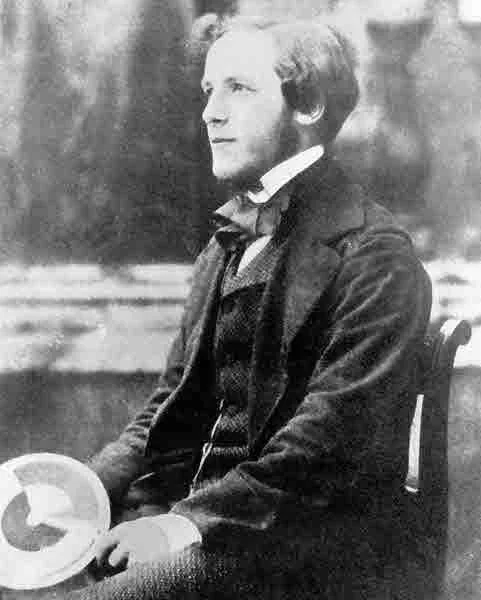
JCM & color wheel: Maxwell, aged 24, holding the color top. (Courtesy of Trinity College, University of Cambridge.)
The precocious Jamsie who lost his mother at eight years old, later raised by a loving father and caring aunts, was now a young man ready to navigate the world on his own. His father was at first reluctant to send him to Cambridge because he would be far from home, under the influence of unruly students. Therefore, Maxwell attended Edinburgh university for three years, before enrolling in Trinity College in Cambridge.
How did James Maxwell understand the world? How did he absorb the academic life? What influenced his faith?
I answer these questions after much research and with great care to explain complicated ideas simply, so that all people would appreciate him. The challenge was worth it for me, and I trust that it will bless you and the children in your life.
If you haven’t read about his childhood or need a refresher, check out Maxwell Marathon Part One and Part Two. I also hope you take advantage of the activities in each blog related to his discoveries.
Edinburgh University (1847-1850)
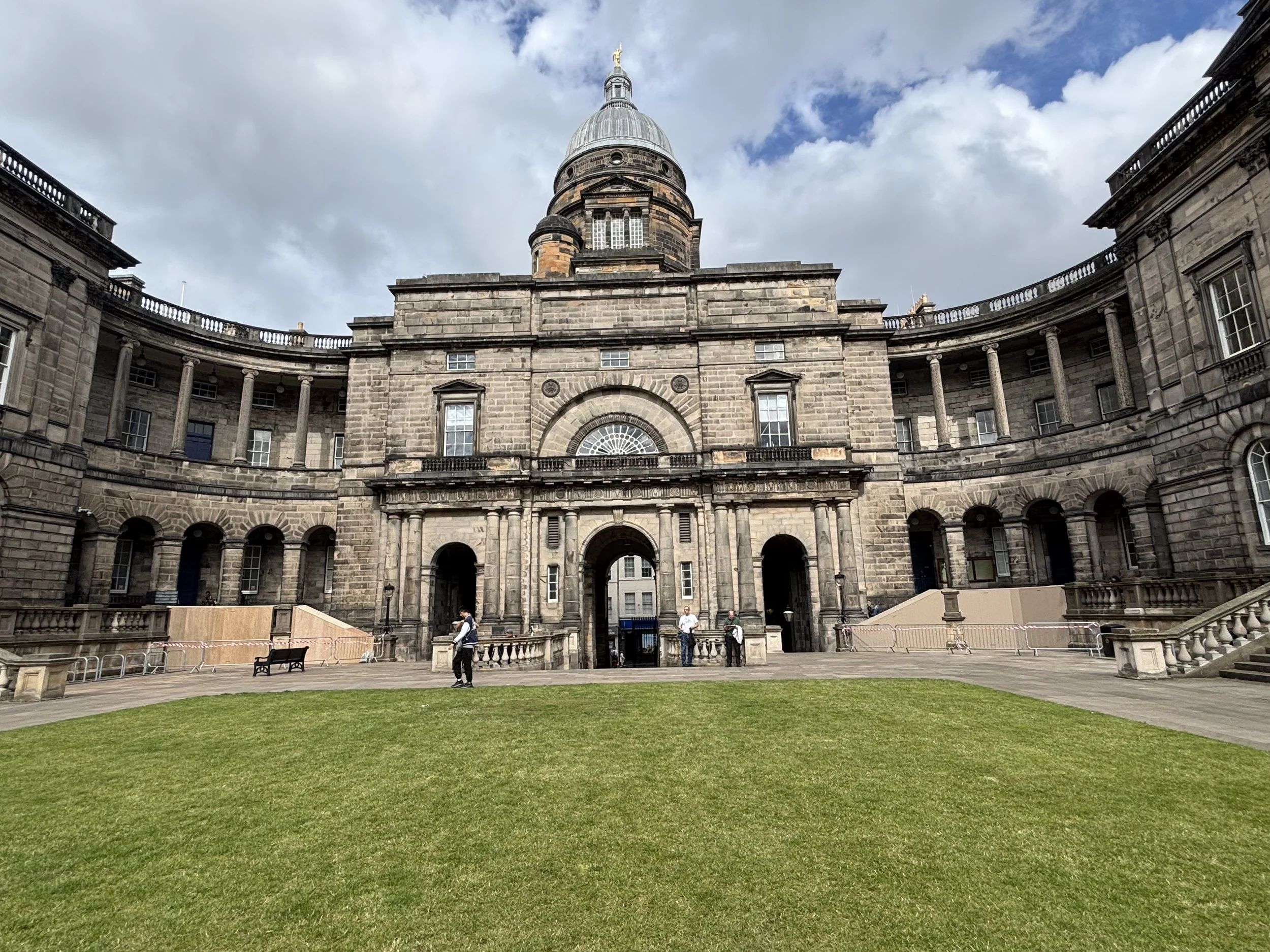
Watch a 360 deg view of Edinburgh University
Taken during my visit, summer of 2025
Sixteen-year-old James entered the University of Edinburgh, where he attended lectures in Chemistry, Physics, Math and Philosophy. During the three years he remained there, he gained valuable knowledge that shaped his thinking, read voraciously about all topics, and pursued many original scientific interests.
The Mental Philosophy lectures given by https://www.britannica.com/biography/Sir-William-Hamilton-9th-Baronet greatly influenced Maxwell’s overall approach to science, and the doctrine of “natural realism” became the framework of all his scientific studies. Although Hamilton was an agnostic, Maxwell drew much of his overall view of Science and Christian Beliefs from his philosophy. Ritchie identifies three features to explain this ( Ritchie, 2026).
-
“ Hamilton did not believe that the finite (such as the human mind) could know anything infinite (such as God) That lay behind his agnosticism, with his a priori assumptions excluding any possibility of a knowledge of God.
Maxwell accepted God’s freedom to reveal himself, to make himself known in Christ through Scripture, and to accommodate that revelation to the finitude of human understanding.”
-
“Hamilton was a Scottish Realist. He believed that knowledge of objective reality was actually possible, and that theories about reality were not just projections of the mind but could correspond to what reality is truly like…”
“Maxwell believed that his famous equations expressed mathematical relationships which were rooted in nature itself. For Maxwell, the mind had to allow itself to be conformed to what is ‘out there’… He believed that nature had been given an intelligibility by God, the same God who had also made the human mind capable of thinking in concert with that intelligibility.”
-
“Sir William Hamilton emphasized that every event in nature can be explained by a cause in nature.
Maxwell accepted this in full, though alongside his conviction that God is the ultimate cause of the whole.”
The Moral Philosophy class introduced Maxwell to Adam Smith’s “The Theory of Moral Sentiments”, a book my son the economist is urging me to read (marcusshera.com). So stay tuned. For now, I will share a quote by Lewis regarding Maxwell’s mastery of the subject.
“It is said that he would have His grasp of Moral Philosophy at the age of nineteen, appears in some of his letters, and reveals an aspect of his genius of which too little is known; and one which his subsequent career did not allow him to carry to perfection.”
Science classes by James Forbes, an all-round scientist, were especially captivating for Maxwell. Forbes had become his mentor before he entered Edinburgh, and thought highly of Maxwell’s special mind. He allowed Maxwell after-hours access to the laboratory for his personal investigations. Forbes also didn’t hesitate to criticize Maxwell’s hasty writings whenever necessary - Read about it -. The two remained lifelong friends and collaborators.
During the holidays and summers, Maxwell retreated to his country estate in Glenlair, and focused intensely on his scientific inquiries. The attic became his laboratory where he set up a table made with a door on two barrels, upon which one would find all sorts of gadgets - bowls, chemicals, pieces of glass, wax, charcoal, copper wires, a lens, and more. These small artifacts were the keys to great thoughts, and the seeds of future discoveries.
Maxwell produced two sophisticated papers of great originality that demonstrate:
● the ability to analyze and compare his predecessors’ works
● an unusual tenacity that led to exhaustive results
● exceptional mathematical skills
● creative experimental style
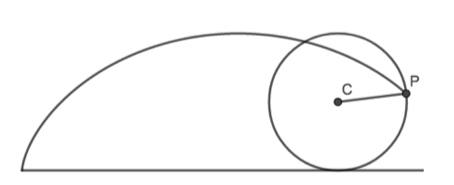
“On the Theory of Rolling Curves”, 1948
This 28 page paper is a truly amazing work by someone his age. He built his studies on the works of the most significant mathematicians in the seventeenth century who had investigated trajectories such as cycloids traced by a point on a rolling circle. Maxwell expanded their work, investigated many other curves and derived the equations of their trajectories.
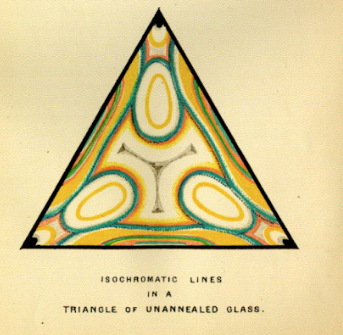
“On the Equilibrium of Elastic Solids”, 1850
In this 40 page article, Maxwell expanded on the work of previous scientists to study the two-dimensional effects of polarized light on jelly, strained glass and other solids. His experiments involved heating and compressing glass, as well as twisting jelly in two vortex-shaped parts, thus slowly changing the strain on the molecules. These procedures caused a change in the refractive index of the material and produced different colored patterns, when polarized light had passed through them. His paper laid the foundation for photoelasticity, with many modern applications in the analysis of strain in structures to identify critical failure points.
Maxwell’s three years spent in Edinburgh University were certainly productive, but his long letters imploring his friends - who had left for different universities - to visit him, indicated that he was lonely. Professor Forbes convinced his father that Cambridge would offer an aspiring scientist like his son many more opportunities than Edinburgh.
Cambridge - Trinity College (1850-1854)
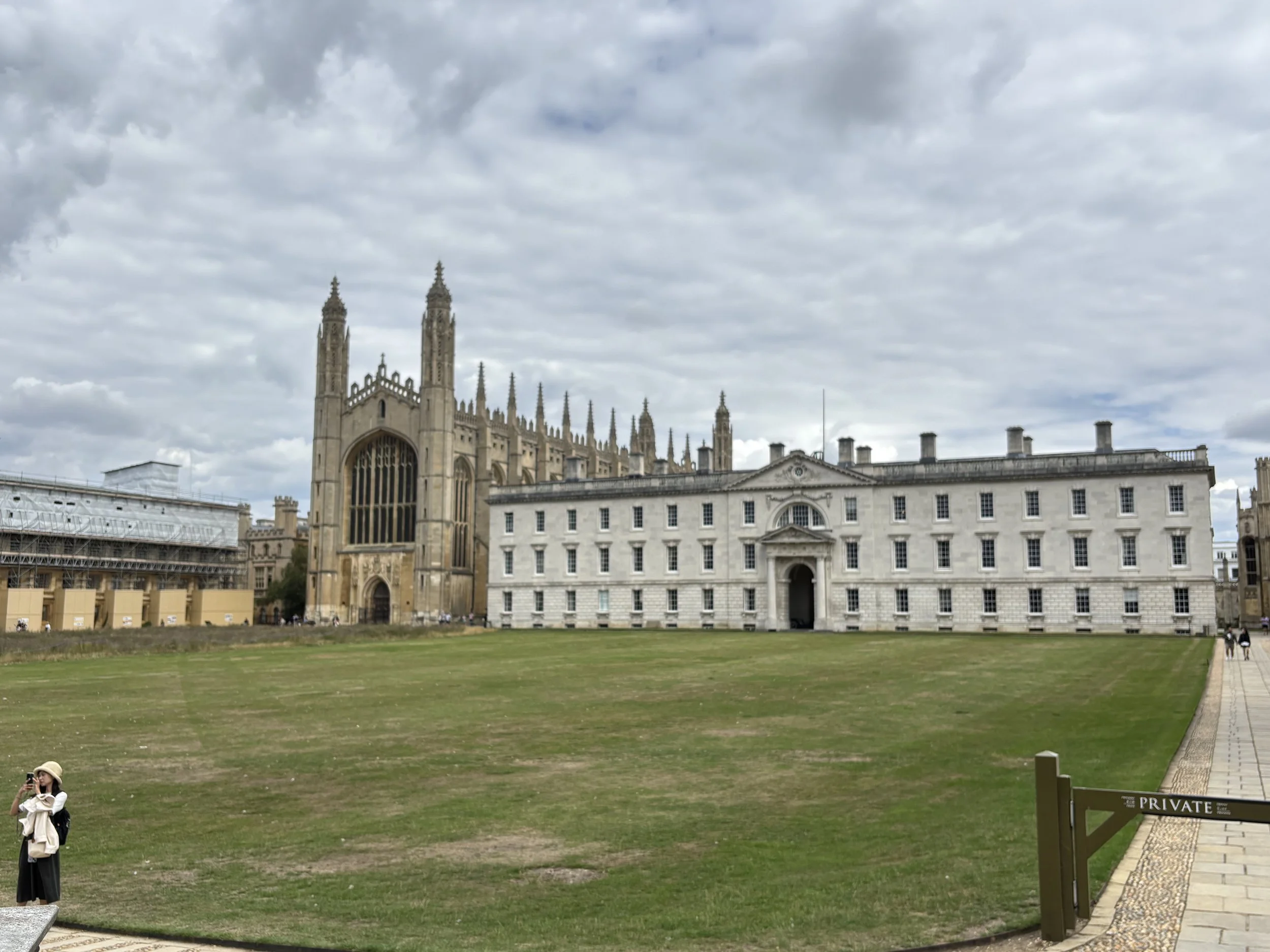
Photo of Trinity College, Cambridge, taken by Suzanne Shera (2025)
Once in Cambridge, James Maxwell, wrote to his father regularly to inform him about his academic progress and activities with colleagues. After one semester at Peterhouse, he made a switch to Trinity College which suited him better academically.
Even though he didn’t have time for his original research due to the heavy workload, his mind was ripening for his future work. In 1852, he was invited to join the Select Essay Club that comprised twelve members of Cambridge intellects, who called themselves “The Apostles”. Here, Maxwell could delve into subjects beyond the scope of ordinary university courses, and produced a great many essays on topics of science, faith and morality.
He graduated from Trinity as a second Wrangler and shared the Smith Prize with another. Throughout his years, his faith solidified and character matured. He made a troop of friends who admired his powerful mind, delighted in his humor, and were humbled by his kindness.
Fellow of Trinity (1854-1856)
This position offered Maxwell ample freedom to plunge into his original work, mostly in Optics and Colour, much on electricity and magnetism, some on fluid motion and thermodynamics. As usual, he always researched the subject of his interest at length, before embarking with his analysis. He also read a large selection of English literature, and did so critically, thus acquiring a deep knowledge about them.
“Maxwell, as usual, showing himself acquainted with every subject upon which the conversation turned. I never met a man like him. I do believe there is not a single subject on which he cannot talk, and talk well too, displaying always the most curious and out‑of‑the‑way information.”.”
Maxwell’s Contributions to Optics
I) Color Theory:
The nature of primary colors was still debated by the 19th century scientists, and most - including Forbes - claimed that these were: Red (R), Blue (B), Yellow (Y). Maxwell had begun to investigate this since 1849, in Forbes Laboratory at Edinburgh, but it wasn’t until 1855 that he made important breakthroughs. Maxwell demonstrated that our eyes had receptors sensitive to Red, Blue and Green (G), after completing two different experiments:
1. Color Wheels:
Maxwell constructed the color wheels with a metal disc, marked by 100 equal divisions on the rim, mounted on a spindle. He covered it with paper disks of primary colors, topped with smaller black and white disks towards the center to control the grey level.
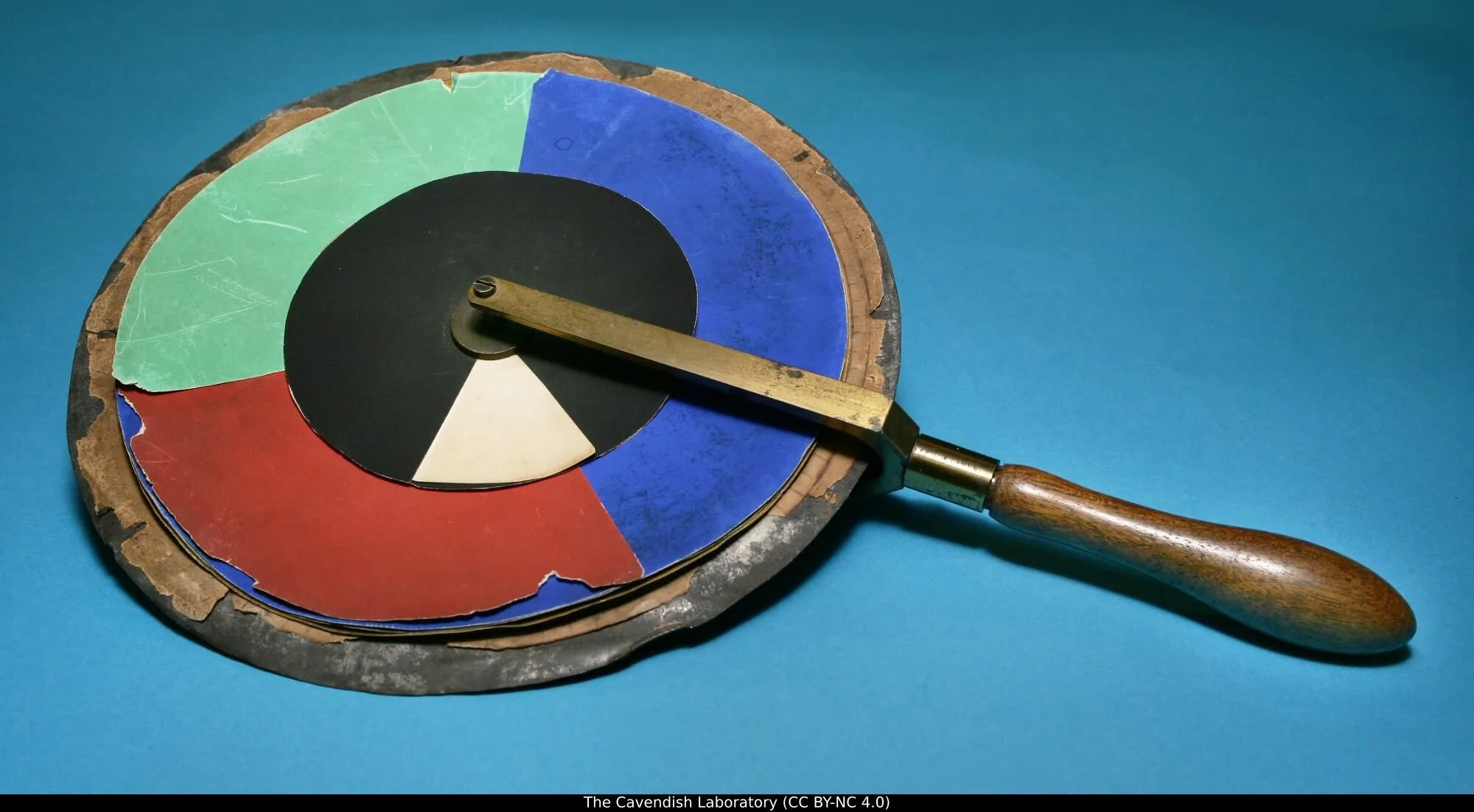
Maxwell's 1855 colour wheel. Cavendish Laboratory.
When he spun the wheel, he realized that:
Any color was obtained by varying the proportions of RBG colors.
Equal proportions of R, B, G produced white, but not so with R,B,Y.
A wheel of Y and B colors produced a whitish outcome, not green as with mixing paint.
Below are photos of Lightlab Clubbers, conducting experiments from Lightlab Chapters 10 and 11

Any color
is obtained by mixing different proportions of R,B,G
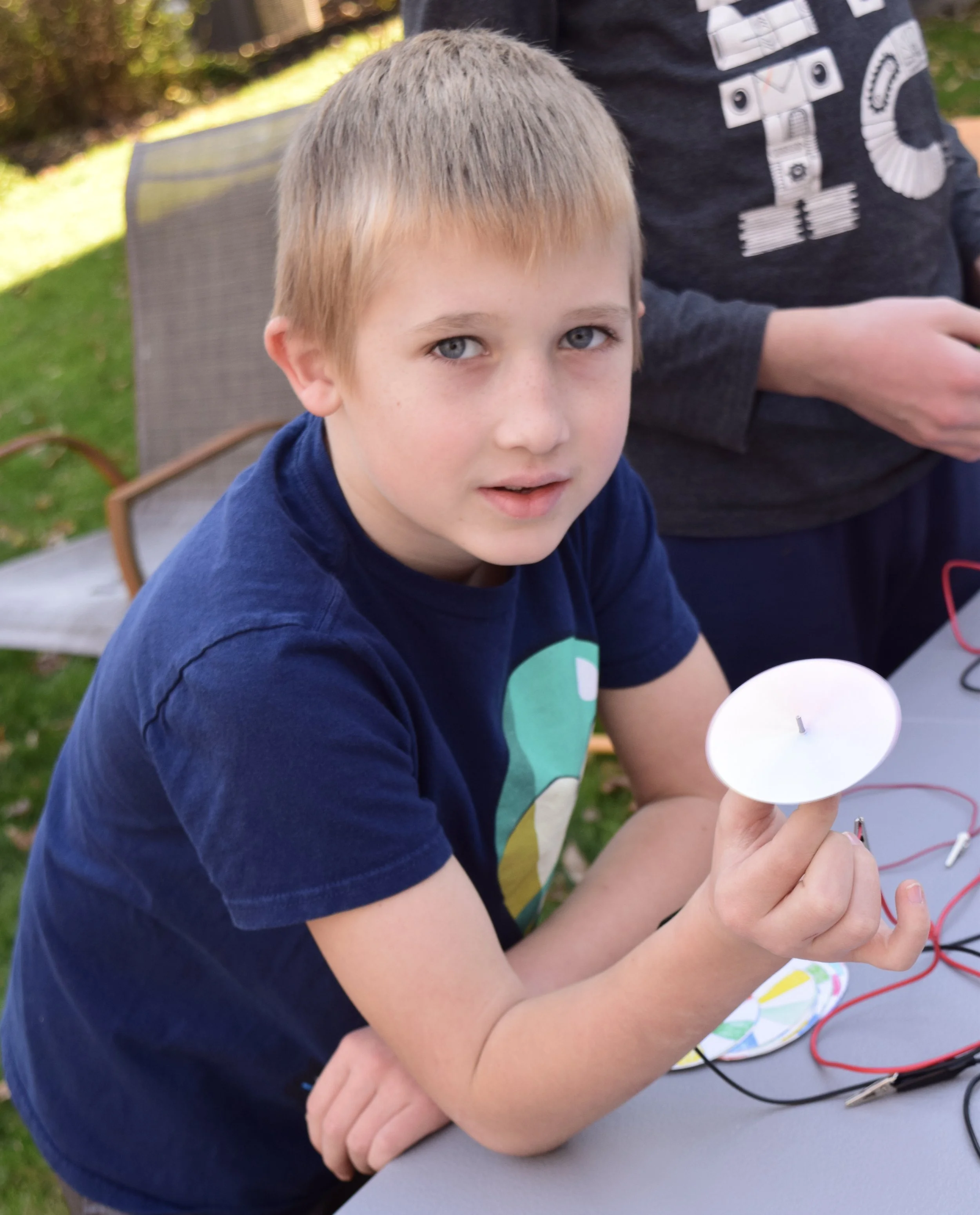
White color
is perceived with (Y, B) or equal proportions of (R, B, G)
Today, most people I encounter are still surprised by this, and a significant number of people who worked through Lightlab Chapter 11, inquired about the result of Y and B wheels.
Therefore, I elaborated on this topic in my blog primary-colors-rgb-or-rby, Instagram and Facebook posts, as well as the Color Theory Tutorial.
Maxwell conducted quantitative experiments, with the help of an assistant, as follows:
· He adjusted the proportions of each color, and spun it fast.
· The assistant detected the new color by matching with a sample.
· The proportions of the colored sectors were recorded and plotted.
2. Study of Color Blindness:
Maxwell tested the vision of many color-blind people, and noticed they could distinguish between blue and yellow, but not between red and green. Therefore, he concluded that the normal human eye must have the ability to detect the RGB colors, but most color-blind people can’t perceive the Green or Red colors. Instead they perceive Yellow, the color produced by a color wheel with G and R sectors.

the arce sisters
spinning a wheel with Red and Green sectors
Maxwell continued to work on Color theory until the end of his life, and published a dozen articles on the topic. I hope to describe them in Maxwell Marathon Part Four. Meanwhile, I would like you to explore the color palette for the computer screens, based on the quantitative results of his experiments with color wheels.

II) Optics:
1. Research on Vision:
Maxwell built his own ophthalmoscope, a replica of the original inventor Helmholtz, for seeing into the eye through a dilated pupil. He was then able to observe the inverted image of a nearby candle on the back of the eye. In story 3 of the Light Module, I describe a scene in the attic when Maxwell used an ophthalmoscope to show his nephews inside the eye.
2. Fisheye Lens
Inspired by the layered crystalline structure of the eyes of fish, Maxwell developed a geometrical theory around a lens with variable index of refraction. He theorized that a sphere with a refractive index highest in the center and gradually decreasing outward, will bend light on a circular path. To read more on this, “ Maxwell's legacy/ Maxwell Fisheye lens”
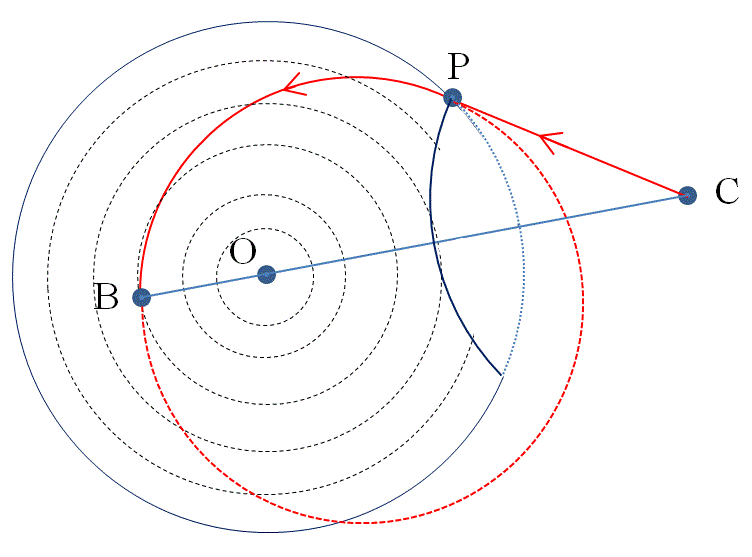
Image Source: University of Aberdeen
III) Electricity and Magnetism:
When Maxwell finally immersed himself in studying electricity and magnetism, he scanned, as usual, all the available books and papers, recommended by his friend William Thomson, commonly known as Lord Kelvin. He was mostly convinced by Faraday’s concept of lines of force in space, described in three Volumes titled “Experimental Research in Electricity”, even though they lacked mathematical support. He also admired Faraday’s method, because he tested the truth experimentally and showed both unsuccessful as well as the successful.
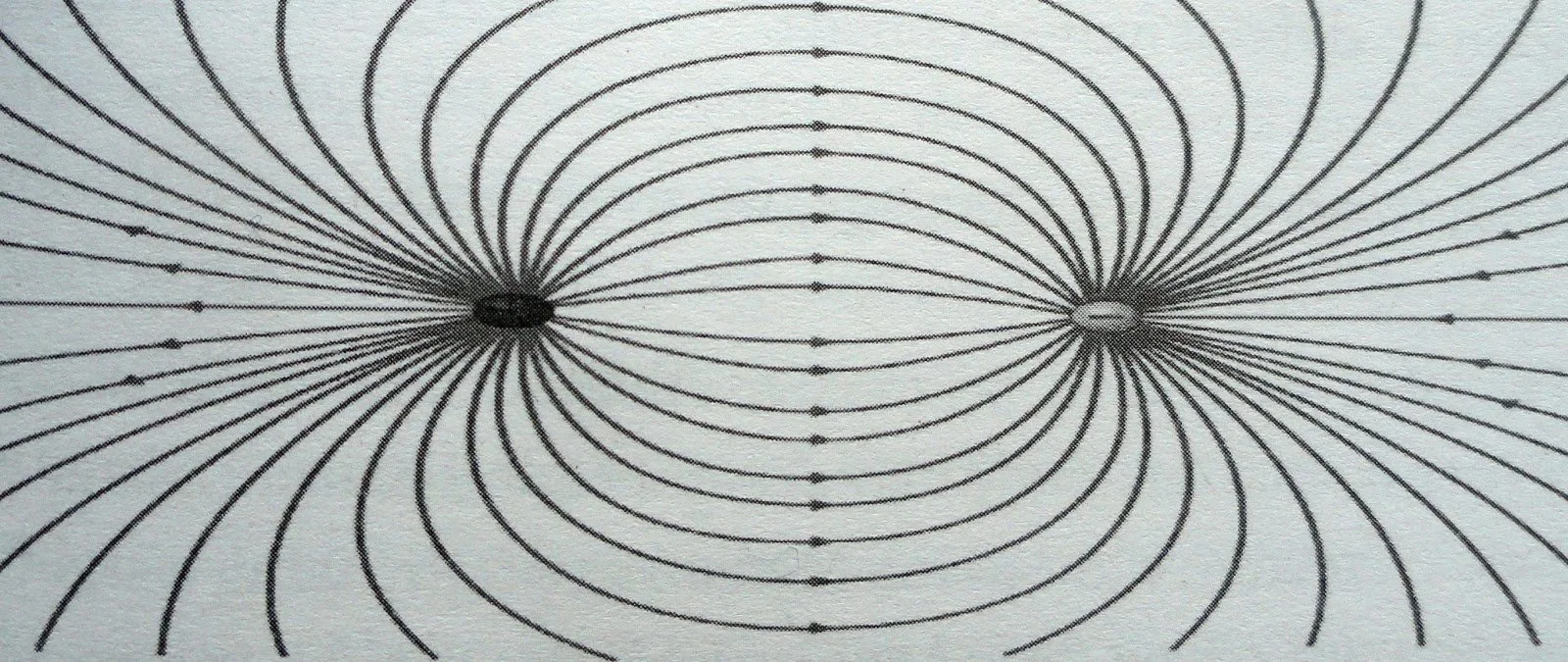
Maxwell resolved to express Faraday’s ideas mathematically, and he imagined electric and magnetic flow to be analogous to fluid motion. In 1855, he published “On Faraday’s Lines of Forces”, where he successfully supported the concept of lines of forces emanating from electric wires. This was the beginning of a lifelong pursuit that resulted in mind-bending thoughts about the relationships between electricity and magnetism.
Maxwell’s character
Maxwell certainly didn’t think highly of himself, inspite of his nobility and exceptional intellectual qualities. His kindness didn’t differentiate between social classes, but helped anyone who needed encouragement, whether a colleague or a farmer. He often reminded his father to lend certain books from their personal library at Glenlair to the farmers who lived on their estate.
A great many of his friends have described him fondly as one of the best people they ever knew. Read just a few of their testimonies and stories, without omitting the odd and humorous ones.
-
“I was at Trinity College, Cambridge, in the same years as Clerk Maxwell …He was of a very kindly disposition (under a blunt exterior), of which I can give an example. I had hurt my eyes a good deal with experiments on light, and … was able to use them very little. He used to find me sitting in my rooms with closed eyes, unable to prepare for next day's lectures, and often gave up an hour of his recreation time, to read out to me some of the book‑work I wanted to get over… he had been “eyes to the blind” for me.”
Rev. Charles Hope Robertson,
(Campbell, and Garnett, pp. 124-125).
_____________________
“Of Maxwell's geniality and kindness of heart you will have had many instances. Every one who knew him [176] at Trinity can recall some kindness or some act of his which has left an ineffaceable impression of his goodness on the memory—for “good” Maxwell was, in the best sense of the word.”
(Campbell, and Garnett, p. 133.)
______________________
“We, his contemporaries at college, have seen in him high powers of mind and great capacity and original views, conjoined with deep humility before his God, reverent submission to His will, and hearty belief in the love and the atonement of that Divine Saviour who was his Portion and Comforter in in trouble and sickness, and his exceeding great reward.”
~ G. W. H. TAYLER,
(Campbell & Garnett, pp. 131-132)
-
“From 2 to 2.30 A.M. he took exercise by running along the upper corridor, down the stairs, along the lower corridor, then up the stairs, and so on, until the inhabitants of the rooms along his track got up and lay perdus behind their sporting‑doors to have shots at him with boots, hair‑brushes, etc., as he passed.”
(Campbell and Garnett, p. 117)
__________________
“and I have seen him in bathing take a running header from the bank, turning a complete somersault before touching the water.”(Campbell and Garnett, p. 125)
____________
Meanwhile in his recreations he was as boyishly agile as ever, and his feats in bathing and gymnastics, though cautiously reported by him, somewhat alarmed his father, whose own health now showed signs of breaking.
(Campbell and Garnett, p. 149).
__________________
“It is difficult to keep up one's interest in intellectual matters when friends of the intellectual kind are [217] scarce.[184] However, there are plenty friends not intellectual, who serve to bring out the active and practical habits of mind, which overly‑intellectual people seldom do.”
(Campbell and Garnett, p. 160).
Father - Son Farewells
While this was a bright period of Maxwell’s career when his ideas were shining and popularity was increasing, a season of darkness was soon to fall upon him as his father’s health took a turn to the worst, leading to his death in 1856. Letters exchanged between them during the father’s illness were bolder than the past, to make the most of their relationship.
A stern advice from his Father, when his son was about to publish his first book on Optics, surely influenced the son in his future publications.
“ “Do nothing in a careless manner, and so get a bad name.””
His friend Lewis also describes their affection father and son had for one another
““it was touching to witness the perfect affection and confidence which subsisted between father and son: the joy and satisfaction and exulting pride which the father evidently felt in his son’s success and well‑earned fame; and, on the other hand, the tender, thoughtful care and watchfulness which James Maxwell manifested towards his father.””
maxwell’s gratitude towards his father
James himself has said to me that to have had a wise and good parent is a great stay in life, and that no man knows how much in him is due to his progenitors. James Clerk Maxwell( Campbell & Garnett p. 8).
At the death of his father, Maxwell felt lost for a while and expressed his thoughts in “Recollections of a Dreamland (June 1856). As the final stanza of the poem reveals, he eventually regained enough strength to resume the responsibilities ahead.
“Let me dream my dream till morning; let my mind run slow and clear, Free from all the world’s distraction, feeling that the Dead are near, Let me wake, and see my duty lie before me straight and plain. Let me rise refreshed, and ready to begin my work again.
”
Conclusion
As this chapter in his life ends, we recognize Maxwell’s career flourishing and faith bearing much fruit. While his aunts and mentors had certainly played an important role, his father impacted him the most. He had doted on his son and modeled integrity, a consistent prayer life, a love for God and others.
Also, the father’s decision to attend Edinburgh University certainly prepared the son Maxwell for the rigor of Cambridge, because he entered there with a wealth of information. His classes in Philosophy improved his morals and faith, even though the teachers weren’t themselves clear in their beliefs, like Hamilton. His firm foundation, established early on, did not go to waste, even in Cambridge, when corruptive influences were rampant. This greatly comforted his father, before he took his last breath. John Maxwell certainly completed his race well, and trained up his child well so he wouldn’t depart from the faith.
The poem “The Students Evening Hymn” is a great manifestation of Maxwell’s deep devotion to his Creator and Redeemer. Here is stanza IX:
“Teach me so Thy works to read
That my faith,—new strength accruing,—
May from world to world proceed,
Wisdom’s fruitful search pursuing;
Till, thy truth my mind imbuing,
I proclaim the Eternal Creed,
Oft the glorious theme renewing
God our Lord is God indeed.”
Did this blog touch you in a meaningful way? Please share in the comments section below?
References:
Campbell, Lewis; Garnett, William. “The Life of James Clerk Maxwell” (Illustrated). Kindle Edition.
Forbes, Nancy; Mahon, Basil. Faraday, Maxwell, and the Electromagnetic Field. 2014
Ritchie, Bruce, 2026, “None Will Work Without a God’: The Faith-Based Physics of James Maxwell.