By Suzanne Shera, M.S.
The Parton Kirk, a Church of Scotland where James Clerk Maxwell (J.C.M.) and his family attended, is being rescued by its local community. The goal is to preserve the legacy of this most outstanding scientist who deserves a lot more attention than he has received in the past.
When the Church of Scotland decided to sell this property, they gave the local community the exclusive right to purchase it, by November 1. The Parton Community Council (P.C.C.) launched an online fundraising effort to raise £70,000 needed to purchase the property and cover the immediate maintenance costs. The P.C.C.’s chairperson Paul Hudson announced that they even exceeded their goal, thanks to generous offline donations that will now be used towards the next phase of planning.
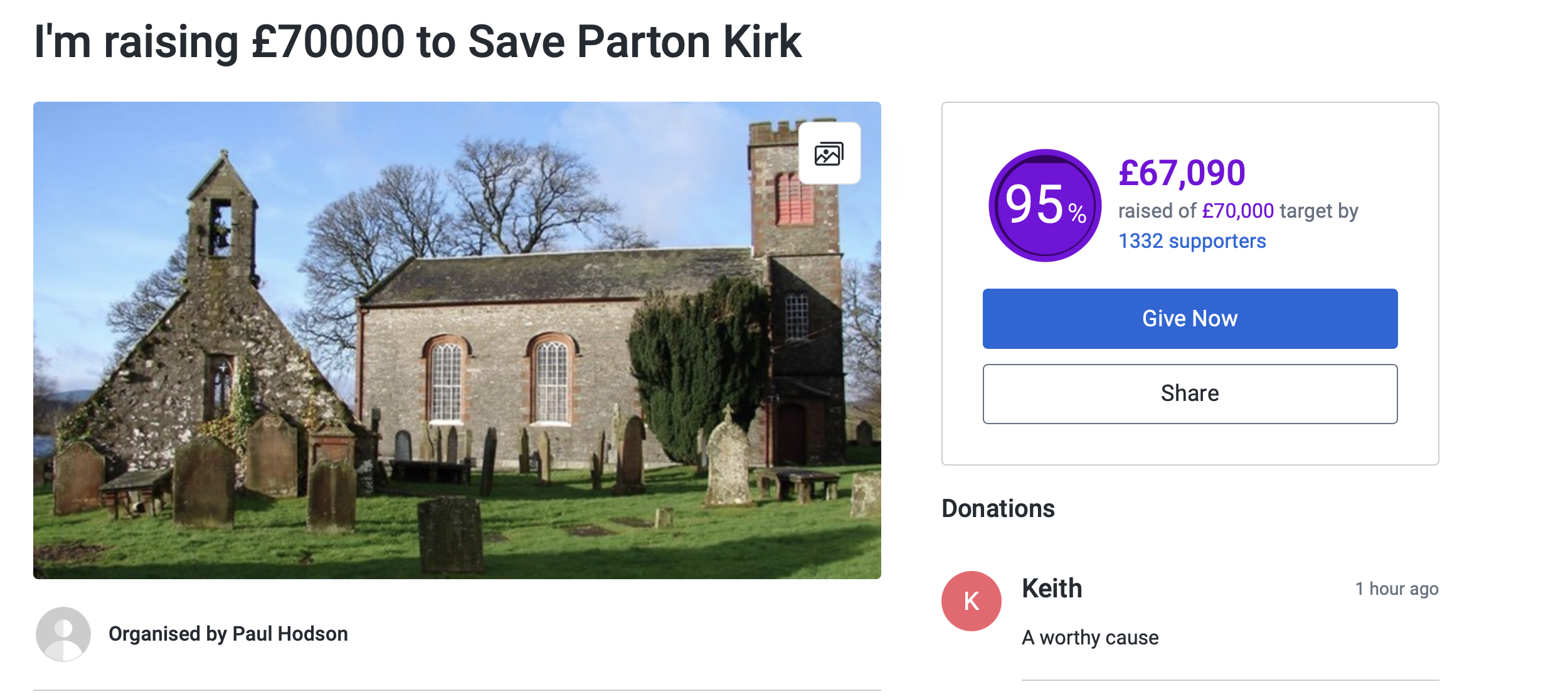
Screenshot of the fundraising page on October 2 2026.
After the purchase of the property, the P.C.C. hopes to build a Science Museum and Activity Center named after J.C.M.. The committee has been preparing since 2008, and has already commissioned “A Parton Kirk Strategic Context Assessment” that evaluates the role this center will play within other concurrent projects to improve tourism in the region.
History of Parton Kirk and the Maxwells
Parton Kirk is nestled in the hills of Castle Douglas, in South West of Scotland, and is situated near Loch Ken, the largest body of fresh water in the country. The church was established during medieval times, and has once carried the name St Ninian. It was rebuilt in 1534, and its ruins remain till today, near the current gothic style church constructed in 1832-34.
This was the time when the Maxwells had just settled in their Glenlair Estate, about seven miles away from Parton Kirk. Both father and son served there as elders, and were generous benefactors to the church as well as the local community.
The involvement of the Maxwells with Parton Kirk was highlighted a few times in the 1882 biography “The Life of James Clerk Maxwell ” by his close friends Lewis and Campbell. Here is what I learned:
About the Father John Maxwell
Lewis first mentions the father John Maxwell as one of the elders in the Parish of Parton (Lewis & Campbell, page 18). He also includes a letter written by the latter to his sister in law Jane Cay where he describes the furnishing of the church.
“This has been a great day in Parton….to appropriate the seats of the new kirk, which was successfully achieved in four hours’ work to the satisfaction of all concerned, by a grand assemblage of the Magnates of the Parochin, who adjourned to a feast at the Manse.”
About the son James Maxwell
Later in the biography, the author mentions the son’s involvement as an elder, his significant contributions to the Corsock Church, and his support of the Parton Kirk endowment fund. He also notes that J.C.M. intended to build a primary school on his own property at his own expense, but couldn’t accomplish his purpose due to ill health. Read the full passage here.
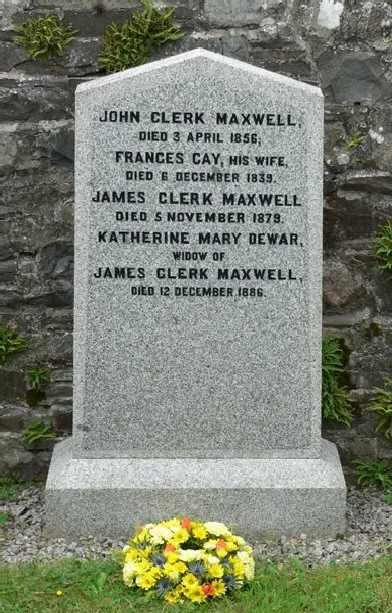
Parton Kirk is the resting placeof the maxwells
The grave site of J.C.M., his parents and wife, lies in the ruins of the original medieval church of Parton Kirk.
Final Remarks
During a trip to Scotland in 2025 to follow the footsteps of J.C.M., I was amazed that he was barely recognized by the Scotts. When visiting his birthplace in Edinburgh, turned into a museum with limited visitation hours, there were only foreigners present. Also on the beautiful day spent at the Glenlair estate, a Scottish filming crew was exploring the river Urr that went through it. They too were completely ignorant that they were standing on the favorite home of J.C.M.
However, my hopes were renewed last month, when I received the letter from the Maxwell Clerk Foundation, regarding the fundraiser to build the J.C.M. museum at Parton Kirk. When I responded, a member of the steering committee invited me to share ideas and materials to help with the project’s development. She also mentioned that my work exploring Science and Christianity sounds very relevant to important aspects of Maxwell’s life and legacy.
As we are nearing his 150th anniversary of death in 2029, and 200th anniversary of his birth in 2031, I look forward to the great milestones reached to perpetuate his contributions to the world of Science and to bring awareness to his Christian faith. Let us pray that the legacy of J.C.M. will live on strongly through the plausible victory of this project. Building a science museum, on the site of the church where he worshiped, suits Maxwell’s philosophy in life, clearly expressed through this quote:
““I think that men of science as well as other men need to learn from Christ, and I think that Christians whose minds are scientific are bound to study science that this view of the glory of God may be as extensive as their being is capable of.
”
References:
Campbell, Lewis; Garnett, William. “The Life of James Clerk Maxwell”,
A history of the church https://www.scotlandschurchestrust.org.uk/church/parton-kirk/
To learn more about James Clerk Maxwell and
access activities related to light
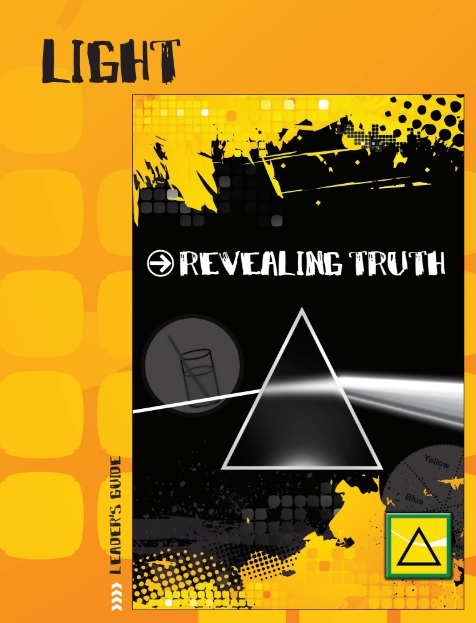
2. check out
THE LIGHT MODULE
where you will find four short stories based on the life of James Clerk Maxwell
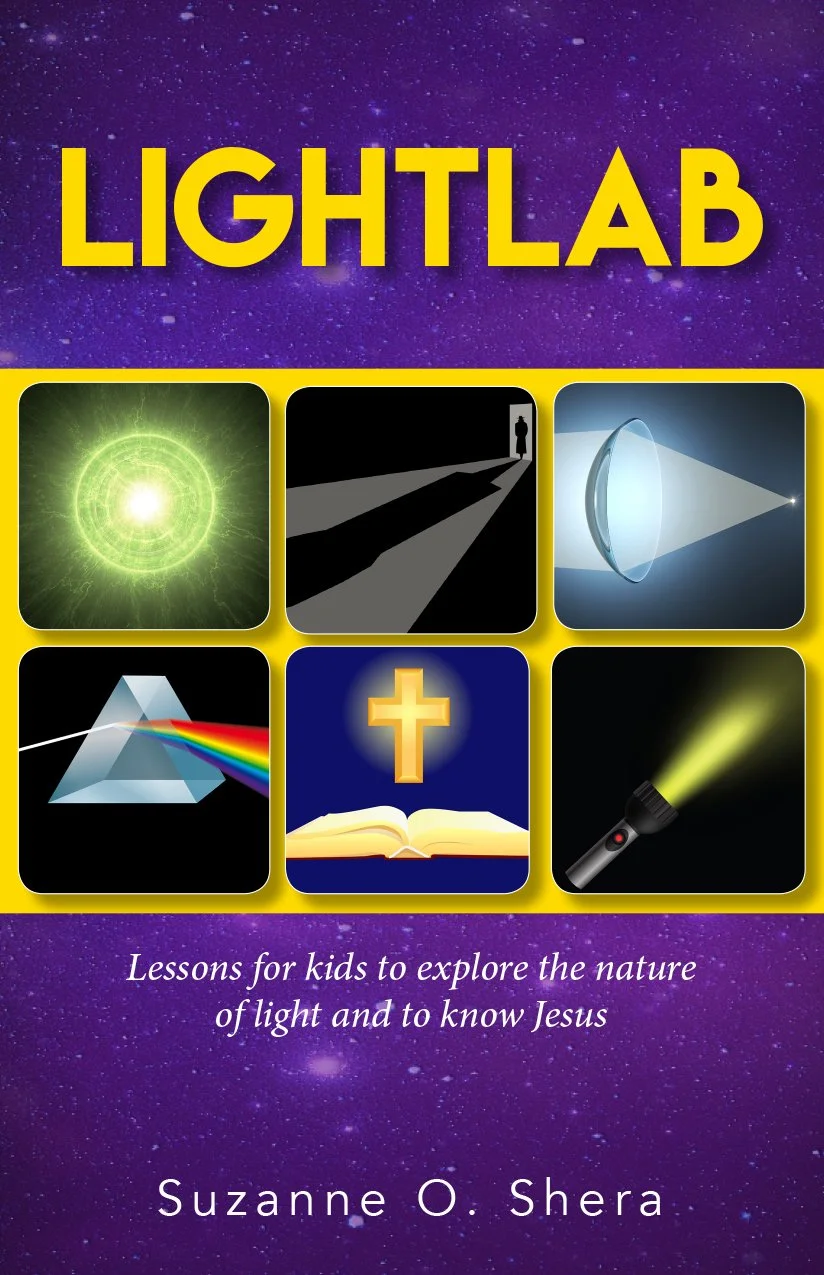
3. Get your copy of lightlab
and learn about both Faraday and Maxwell who partnered to explain the nature of light and more